
Medical Emergency: how we captured such powerful doctors' stories
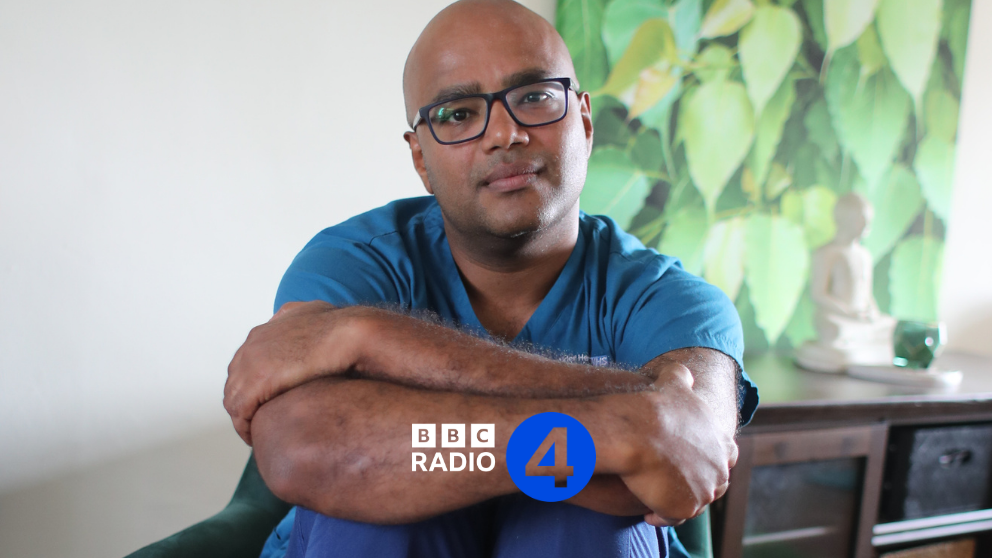
'Hearing the doctors tell their stories in their own voices was very, very moving. I do hope the retreat helped them.' - feedback on Bespoken Media's 'Medical Emergency' programme for BBC Radio 4's File on 4 Investigates.
Content note: references to suicide and mental health
We've had an overwhelming response from both clinicians and the general public, thanking me and the Bespoken Media team for raising the profile of the taboo subject of doctor (physician) suicide.
One of the strongest areas of positive feedback centres around the stories from the doctors themselves that permeated the programme.
“What struck me were the real doctor voices, and stories that will be all too familiar to those working in health.”
“Hearing first person accounts was so impactful. It was a sobering listen with doctor colleagues sharing some incredibly difficult experiences.”
One curious listener wrote asking whether the recordings from the organic farm were from an archive of mine or whether they were done especially for the programme.
Good question!
This was the first time I have ever recorded any of the storytelling circles I have facilitated.
Storytelling circles
Recording risks the psychological safety of the circle. We tend to be less authentic or honest when we know we are being recorded.
So how did we capture such compelling and vulnerable 'storytelling circle' stories?
I have been a contributor to wellbeing retreats specifically for doctors run by Jo Hacking (About Wellbeing Ltd) at Sheepdrove Organic Farm in Berkshire for four years now.
I have been responsible for the daily storytelling circles that take place during the residential retreats. I coach retreat participants as storytellers to craft and share 5-minute stories based on a true, lived experience in front of the other doctors.
Some of the stories shared at these retreats have been deeply triggering and emotional, hence the importance of psychological safety before, during, and after the circle. Each circle lasts strictly for one hour, and the audience responds to the stories shared at the start of the circle - not with questions or trying to problem solve, but by resonating with the emotions of the stories and sharing a bit about themselves.
For the documentary, we created a special, one-off, one day retreat themed around suicide in the medical profession.
We were transparent that certain elements of the retreat (i.e. the storytelling circles) would be recorded for use in a BBC Radio 4 documentary on the topic of suicide prevention in doctors.
We invited the participation of doctors from the four specialties at the highest risk of suicide: primary care (GPs); anaesthetists; surgeons; and psychiatrists. The retreat did include other specialties including paediatrics, emergency medicine, and radiology.
Half of the retreat participants were doctors who had previously had experience of our storytelling circles. Others were sought out, or were recommended, as doctors with experience of suicide and / or having made suicide attempts, or been close to someone in the profession who had.
Ground rules
There were four storytelling circles that took place during this one-day retreat, one for each high-risk specialty. This was important to try and elicit themes that were perhaps unique to different specialties e.g. anaesthetists. Each circle had two storytellers that I had coached to share a short story in front of doctors from the same specialty.
One of my key roles as facilitator was to set ground rules.
There were a few participants in the circle who declined to have their voice recorded while still contributing to the discussion after the stories had been shared. Everyone at the retreat was proud to be part of something which could contribute towards changing the mental health narrative in the medical profession.
Needless to say, with 4 hours of storytelling circle audio captured, producer Amanda Hargreaves and I had such rich material to choose from. It was so hard to choose what to include in the documentary.
A significant part of my narration was to summarise key parts of certain stories and then use the storyteller’s voice to really bring out the emotion of the lived experience.
As one listener fed back: “I do not doubt for a second that those whose stories you told must have felt some healing to hear you sharing theirs, not just to be heard, but putting their struggles to positive effect.”
I believe that data plus emotions create stories with impact.
Another listener validated our efforts: “In a sea of statistics and datasets, it is always the human stories that hit home.
"There was something incredibly powerful - and refreshing - about the public hearing directly from staff affected by the system.
"Not just the numbers, but what it actually feels like to be on the receiving end of it.”
Additional feedback:
"Our stories are real, and our emotional responses are what make us human, in a profession and culture that ‘ask’ us to dehumanise ourselves and stay silent. Hearing my voice and those of the other incredible participants was humbling." [Surgical storyteller]
"I found the Radio 4 programme very very moving, especially the stories from the doctors at the retreat." [Social Media Consultant]
"Thank you so much to you and your collaborators for makingthat radio programme. It is so important to hear the stories from the peopleliving them." [Teacher]
"Thanks for sharing our stories and helping us not feel alone". [Consultant Paediatrician]
"Lalith sensitively and brilliantly explores the complex and distressing topic using the voices of lived experience" [Consultant Psychiatrist]
Listen to 'File on 4 Investigates: Medical Emergency' on BBC Sounds.
There are lots of places to get help if you have been affected by issues raised in this programme or on this post.
Samaritans are available for anyone struggling to cope and provides a safe place to talk 24 hours a day.
Phone: 116 123 / link to Samaritans website
Specific resources are available to doctors and healthcare workers - some links to these are below:
NHS Practitioner Health - link to NHS Practitioner Health
British Medical Association confidential helpline - counselling and peer support for doctors and medical students
Department of Health and Social Care - (text message service - support available for workers in NHS England)
Doctors In Distress - link
You Okay Doc? - link
NHS Employers suicide Prevention/Postvention Toolkit - link